Classification And Adaptations
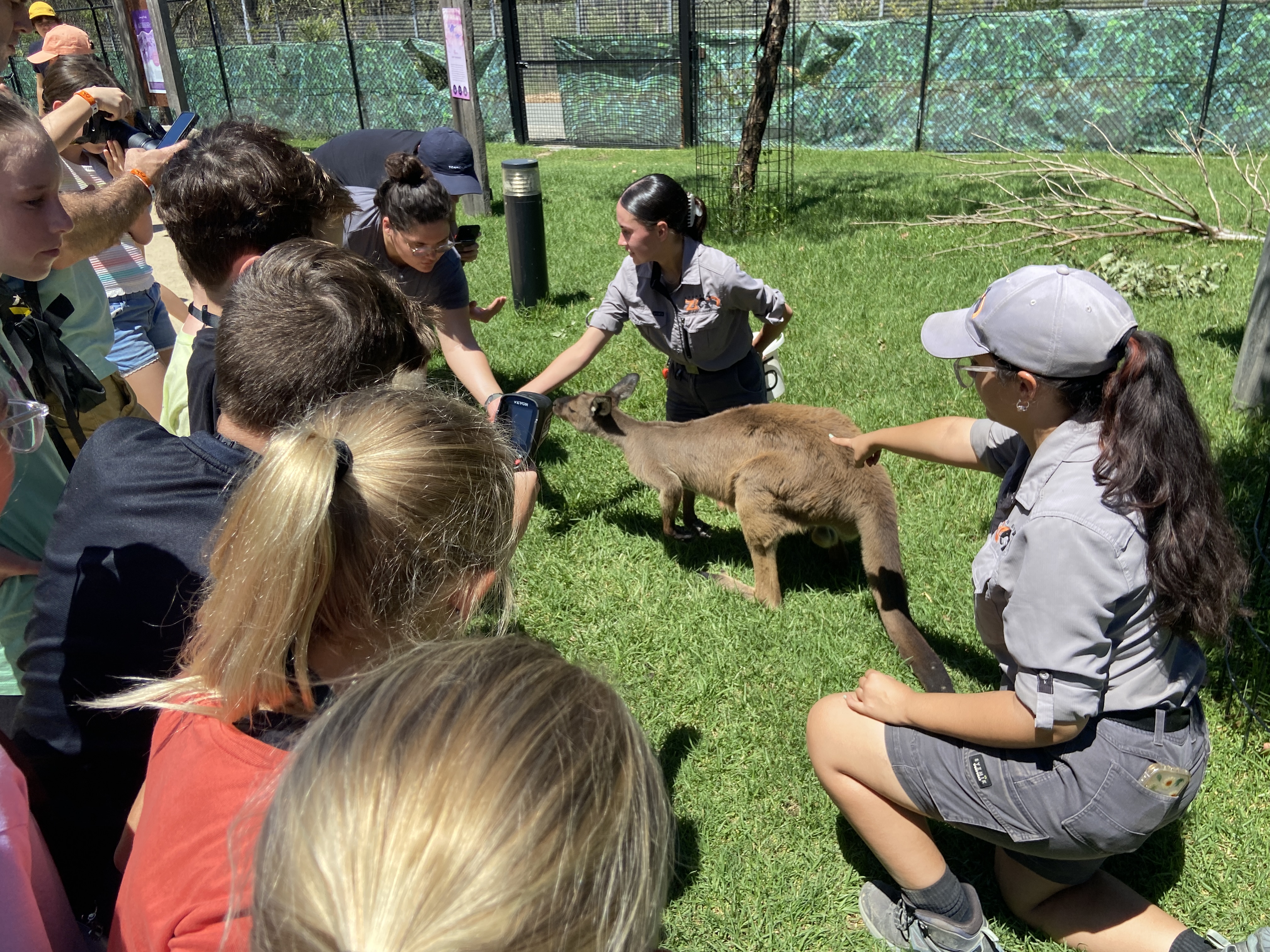
Students will explore adaptations of Australian species and learn about classification in this roving workshop. Using tour guiding equipment and thermal imaging cameras, students will gain a deeper understanding of thermoregulation and survival in different Australian habitats.
About the Program
Students will explore adaptations of Australian species and learn about classification in this roving workshop. Using tour guiding equipment and thermal imaging cameras, students will gain a deeper understanding of thermoregulation and survival in different Australian habitats.
Documents
Questions & Answers
Objectives
Stage 4
Living World and new Syllabus Cells and Classification
SC4-14LW
The Sydney Zoo workshop will contribute to the outcomes and content in the 2018 Science Syllabus including: LW1 There are differences within and between groups of organisms; classification helps organise this diversity (ACSSU111) Students: a . identify reasons for classifying living things b. classify a variety of living things based on similarities and differences in structural features c. use simple keys to identify a range of plants and animals e. outline the structural features used to group living things, including plants, animals, fungi and bacteria f. explain how the features of some Australian plants and animals are adaptations for survival and reproduction in their environment
SC4-CLS-01
The Sydney Zoo workshop will contribute to the new outcomes and content in the new NSW Science Syllabus including: Classification of living things - Describe the characteristics of living things - Discuss the role and importance of classification in ordering and organising the diversity of life on Earth - Classify species using scientific conventions from the binomial system of classification, including kingdom, phylum, class, order, family, genus, species - Conduct an investigation to observe and identify the similarities and differences of structural features within and between groups of organisms - Investigate how organisms in an Australian habitat are adapted to their environment and document findings in a scientific report - Interpret dichotomous keys to identify organisms surveyed in an Australian habitat
Itinerary
Check in
0.25 hour
As you arrive off the bus, a Sydney Zoo teacher or staff member will meet you to marshal the students for a short briefing and check in your student numbers. Please have final student and teacher numbers ready if you can. We have 3 things to remember for a great day to be Safe, Slow and Quiet.
9.45 Workshop
2 hours
If you are booked into a 9.45am workshop, your Sydney Zoo teacher will meet you at your briefing and take you straight to your starting point to have morning tea and get ready to begin. After your workshop you can explore the other half of the zoo until your bus is ready to pick you up.
11.45 Workshop
2 hours
If you arrive but do not have a workshop until 11.45am, you will be checked in and briefed then welcomed to enter the zoo with your class. We recommend taking students to see the Asia and African precincts before your workshop as you will see the Aquarium and Australian Precincts with your Sydney Zoo teacher.
Leaving the zoo
0.25 hour
When you are scheduled to be picked up by your bus, we ask you to marshal inside the zoo and a teacher can check if the bus is ready outside. Once they are in place, you can exit the zoo through the doors you entered to get safely on the bus again.